Your Blood Group Matters when it comes to COVID-19

Don’t miss the key findings of the first study which assessed the relationship between patient blood group and COVID-19.
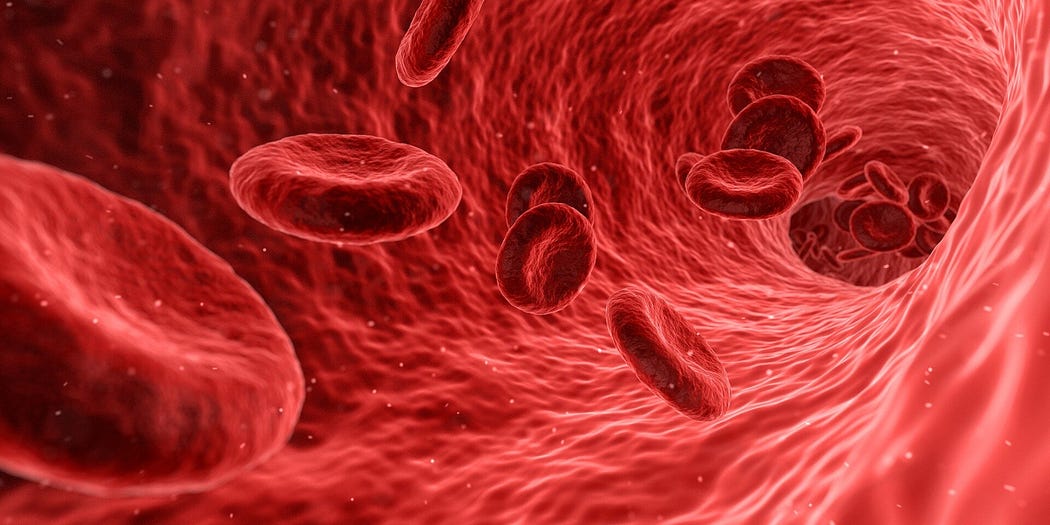
ABO blood groups and susceptibility to COVID-19
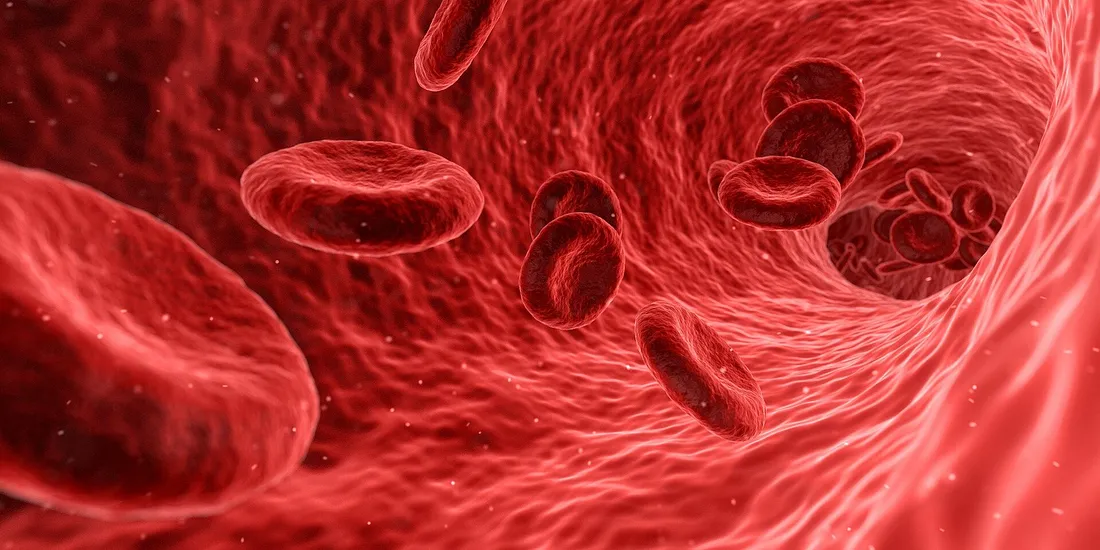
Figure 1. ABO Blood group could influence susceptibility to COVID-19. From Medical Xpress.

With the rapid growth in the number of SARS-CoV-2 infections and COVID-19 fatalities, there is an urgent need to develop biomarkers that may help us to identify the most vulnerable patients.

The use of blood group as a biomarker may be useful for COVID-19 because there is evidence that in other viral illnesses (e.g. Hepatitis B) having a certain blood group influences risk of disease.

Knowing this, a group of researchers collected data from a Chinese hospital in a total of 1,775 patients infected with SARS-CoV-2.

The researchers used blood group records from 3,694 non-infected patients from Wuhan to act as a control. In studies we always need a control to compare measurements, otherwise what you find loses credibility.

Now, let’s see what they found!

The proportion of blood group A patients with COVID-19 was significantly higher compared to non-infected people (37.8% vs. 32.2%).

In contrast, the proportion of blood group O patients with COVID-19 was significantly lower compared to non-infected individuals (25.8% vs. 33.8%).
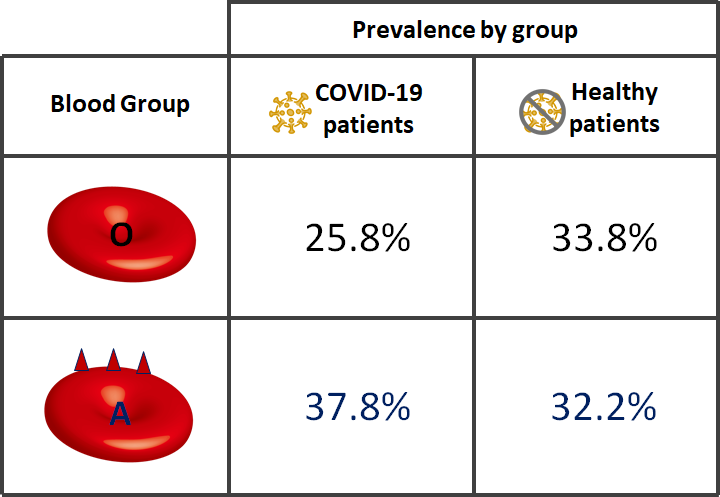
Proportion of blood groups A and O among COVID-19 patients versus healthy controls
Figure 2. In this Chinese study, there were substantially more blood group A patients with COVID-19 compared to those with blood group O. The proportion of healthy patients with blood groups A and O are shown for comparison.

These results suggest that patients with blood group A may be more susceptible to developing COVID-19 when infected by SARS-CoV-2 compared to those with blood group O.

However, you might be questioning whether patients who had died influenced these findings…

Fortunately, the researchers thought of this and included blood group records from 206 patients who had died of COVID-19.

Again, similar trends applied…

Blood group A was associated with a 48% higher risk of death compared to the other blood groups. Whereas, blood group O was associated with a 37% lower risk compared to non-O blood groups.

This study confirms previous findings in SARS-CoV (a very similar virus to the current coronavirus), in which it was revealed that medical staff in Hong Kong were less likely to be infected if they were blood group O.

Although both studies are only showing an association, there is in fact science to back up these trends.

Individuals that are blood group O produce anti-A antibodies against the red blood cells of people with blood group A. On the other hand, individuals with blood group A don’t produce these antibodies as they would destroy their own blood cells!

Surprisingly it seems that these anti-A antibodies don’t just target foreign red blood cells, but they appear capable of inactivating the SARS-CoV virus too!

Due to the similarity between SARS-CoV and SARS-CoV-2, these findings may explain why fewer individuals with blood group O had COVID-19.

You see, both these viruses use the S protein to enter into human cells which express the ACE2 receptor. The anti-A antibodies from individuals with blood group O blocked the binding of viral protein S to the ACE2 receptor in human cells, consequently blocking its entry.
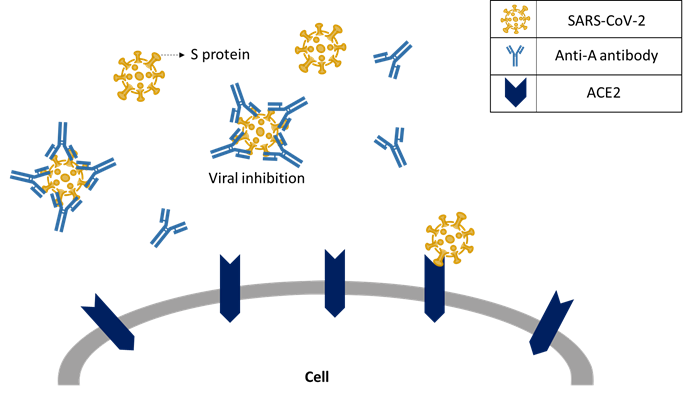
Anti-A antibodies blocking SARS-CoV-2 from binding ACE2 receptors
Figure 3. Anti-A-antibodies present in individuals with blood group O may bind and prevent SARS-CoV-2 from attaching to ACE2 receptors in the cell membrane, potentially reducing the risk of infection.

Please note that being blood group O does not grant you automatic protection against the virus. Nevertheless, the presence of anti-blood antibodies may give you a slight advantage if you are infected by SARS-CoV-2, compared with someone who is blood group A.

Once more studies confirm these trends, we will probably begin to use blood group information as a biomarker to quantify COVID-19 risk in patients.

For now, everyone should be as cautious as they can, regardless of what blood group they may be.

Related work: faecal microbiota transplantation for C. difficile. NEO MedComms turns complex science like this into clear medical education materials and healthcare communications. Discuss a similar project with our team.


Struggling to make your medical communications stand out?

✕

Hager El-Kaddar

Medical Writer

Hager El-Kaddar is a pharmacist and medical writer specialising in metabolic disease, with expertise that bridges pharmaceutical sciences and extensive experience in medical communications.

Certified under the ABPI Code of Practice, she excels in evidence-based content development, translating complex clinical data into actionable insights while ensuring scientific rigor and ethical compliance.

✕

Mariem Omran

Business Development

Mariem Omran leads Business Development at NEO Medical Communications, building relationships with new partners across the healthcare and life sciences sector.

She takes the time to understand each organisation’s needs and shows how NEO’s scientific and creative teams can help them communicate with clarity and impact.

✕

Sam Madders

Studio Lead

Sam Madders is Studio Lead at NEO Medical Communications, overseeing the production of our design and digital work.

He manages the studio’s workflow and quality standards, making sure every deliverable, from print materials to interactive content, is carefully crafted and delivered to brief.

✕

Jeremiah Eze

Account Executive

Jeremiah Eze is an Account Executive at NEO Medical Communications, supporting clients and project teams day to day.

He coordinates timelines, feedback and deliverables, making sure every project runs smoothly and that clients always know where their work stands.

✕

Homer Jiassemides

Creative Lead

Homer Jiassemides is Creative Lead at NEO Medical Communications, guiding the visual and conceptual direction of our work.

He brings together design, storytelling and scientific accuracy to create campaigns, materials and experiences that capture attention and communicate complex science clearly.

✕

Lorena Torres

Client Services Director

Lorena Torres is a Client Services Director at NEO Medical Communications, where she partners with pharmaceutical, biotech and healthcare clients to turn their objectives into clear, well-managed projects.

She keeps teams aligned from first brief to final delivery, combining a strong understanding of medical communications with a focus on quality, timelines and lasting client relationships.

✕

Nader Qarini

Operations Director

Nader manages the operational infrastructure that keeps projects moving and teams supported. From internal workflows to delivery timelines, he ensures that the right systems are in place to help NEO run smoothly behind the scenes.

✕

Dr. Patrick Blaise Collins

Medical Communications Director

Dr. Patrick Blaise Collins brings over 15 years of experience in medical writing, scientific leadership, and AI-integrated communication, with a PhD in Exercise Physiology and a background in translational research.

He leads NEO’s scientific storytelling with clarity and precision, building strategic content frameworks, and driving innovation across regulated medical environments.

✕

Renisa Desouza

Strategy Director

Renisa Desouza is NEO’s Strategy Director, assisting clients throughout the Americas with strategic direction that’s clear, actionable, and grounded in medical insight.

She works fractionally with commercial and medical teams to shape messaging, streamline execution, and ensure every asset aligns with brand and market goals.

✕

Zoe Phillips

Head of Strategy

Zoe Phillips is Head of Strategy at NEO Medical Communications, leading the thinking behind our clients’ communication plans.

She works closely with clients and the wider NEO team to understand each audience, define the key messages and build strategies that connect scientific evidence with real-world impact.

✕

Arun Dhillon

Client Services Director

Arun acts as the link between clients and internal teams, ensuring that each project starts with a clear understanding of goals and ends with a result that delivers real value.

With experience managing communication across multiple industries, Arun keeps the focus on clarity, timelines, and trust.